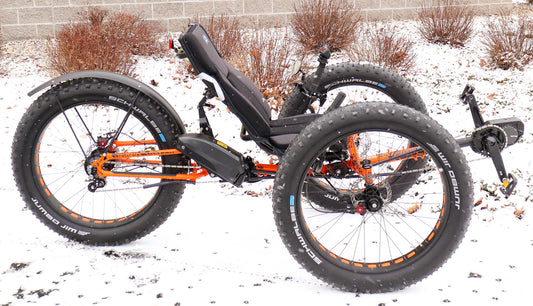
Collection: Rear-Suspension Trikes
When it comes to unpaved adventures, rear-suspension recumbent trikes are the "sweet spot" of the cycling world. A rear-suspension setup acts as a critical buffer, turning potholes on paved roads, jarring gravel and bumpy trails into a smooth, manageable cruise.
Why Does Rear Suspension Matter on a Trike?
On a traditional upright bike, you can stand up on the pedals to let your legs act as natural shock absorbers. On a recumbent, your body is in constant contact with the seat. This makes suspension—specifically in the rear—vital for three reasons:
- Vibration Dampening: Continuous "road buzz" from bumpy roads, gravel and trails leads to fatigue. Rear suspension absorbs these high-frequency vibrations making the ride smoother and less punishing.
- Enhanced Traction: On loose trails or steep gravel climbs, a bouncing wheel loses grip. Rear suspension keeps the drive wheel glued to the terrain, ensuring your pedaling power actually moves you forward.
- Comfort: Direct hits from potholes or tree roots can be tiring for your body on a recumbent over time. The rear shock "rounds off" these impacts, providing more comfort, especially for people with back and neck issues.
Is Rear Suspension Enough?
For 80% of trail riders, rear suspension combined with high-volume tires (like Schwalbe Big Apples) provides plenty of comfort. However, if you plan on tackling "technical" mountain bike trails with large rocks or deep ruts, you may want to look into full-suspension models (front and rear) for maximum shock absorption.

-
ICE Trikes Full Fat RS Rohloff Shimano STEPS EP8 Orange Recumbent Trike
Regular price $12,699.00 USDRegular priceUnit price per$12,699.00 USDSale price $12,699.00 USDSold out -
ICE Trikes Demo Sprint Pixel RS Shimano STEPS EP6 Passion Red Recumbent Trike
Regular price $9,799.00 USDRegular priceUnit price per$9,899.00 USDSale price $9,799.00 USDSale -
ICE Trikes Sprint Pixel RS Passion Red Recumbent Trike
Regular price $6,799.00 USDRegular priceUnit price per$6,799.00 USDSale price $6,799.00 USD -
ICE Trikes Full Fat RS Rohloff Shimano STEPS EP8 Hostel Shoppe Limited Edition Custom Blue Recumbent Trike
Regular price $15,499.00 USDRegular priceUnit price per$15,499.00 USDSale price $15,499.00 USD -
ICE Trikes Adventure HD 26 RS Shimano STEPS EP801 Kiwi Green Recumbent Trike
Regular price $10,599.00 USDRegular priceUnit price per$10,599.00 USDSale price $10,599.00 USD -
ICE Trikes Adventure 26 RS Shimano STEPS EP801 Compact Blue Recumbent Trike
Regular price $10,499.00 USDRegular priceUnit price per$10,499.00 USDSale price $10,499.00 USD -
ICE Trikes Sprint Pixel RS Shimano STEPS EP6 Passion Red Recumbent Trike
Regular price $9,599.00 USDRegular priceUnit price per$9,599.00 USDSale price $9,599.00 USDSold out